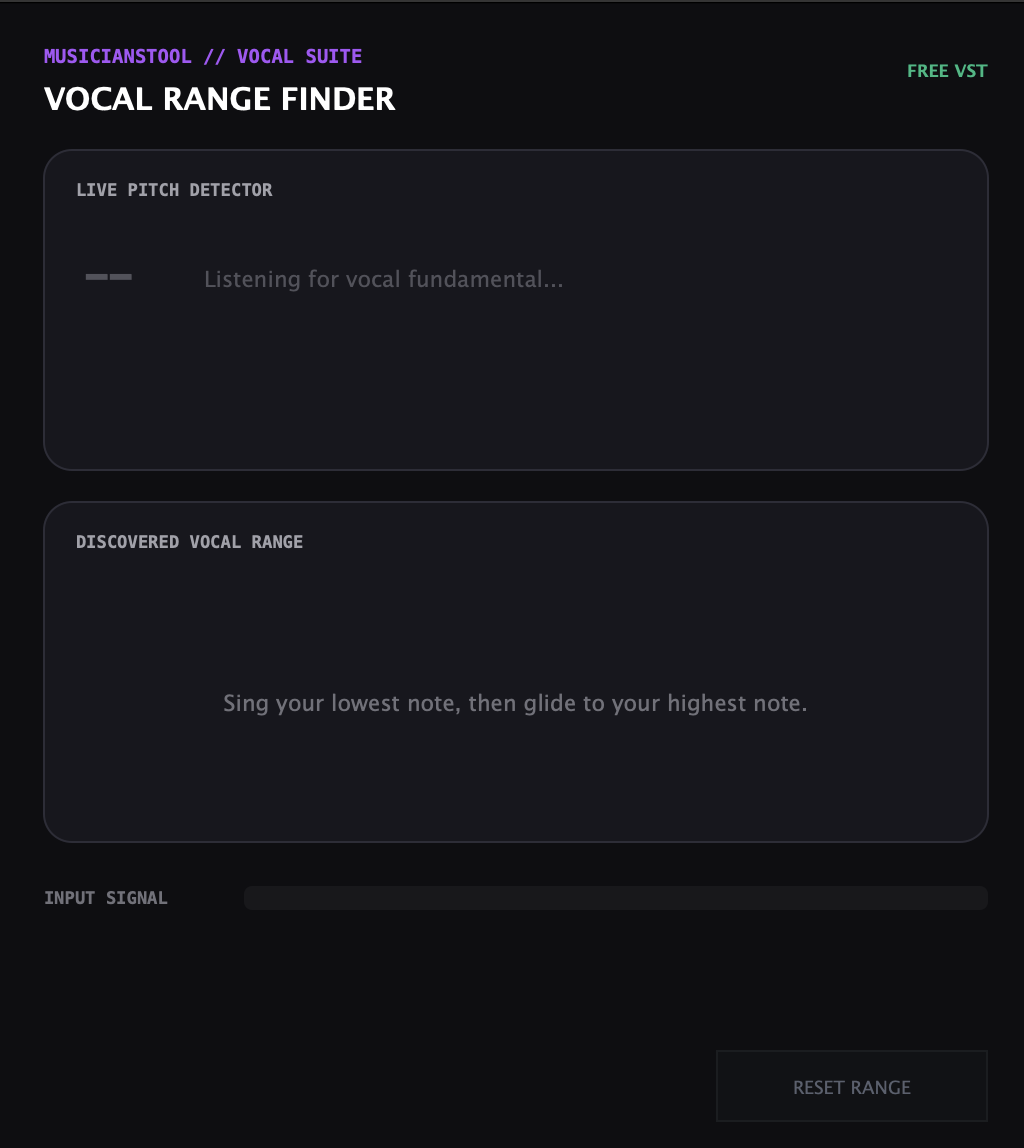
Vocal Range Finder uses real-time YIN pitch tracking and Cumulative Mean Normalized Difference analysis to identify your lowest note, highest note, octave span, and exact voice classification (Bass, Baritone, Tenor, Contralto, Mezzo-Soprano, Soprano). All audio detection runs locally in your browser with zero latency and complete privacy.
Vocal Range Finder Pro
Sing into your microphone to identify your lowest and highest pitch, determine your vocal classification, and find your celebrity singer match.
Live Microphone Vocal Analysis
Determine your lowest and highest vocal pitch with sub-bin precision YIN tracking.
Drag and drop an a cappella vocal recording or stem to analyze its frequency and harmonic range.
Drag & Drop Any Audio File Here
Drop any MP3, WAV, or FLAC track for instantaneous BPM, Musical Key & Waveform extraction
Standard Vocal Ranges & Frequency Reference Chart
Standard note boundaries, fundamental frequency ranges, and passaggio transition points for each vocal category.
| Voice Type | Standard Range | MIDI Range | Frequency Range (Hz) | Passaggio (Break) | Notable Artists |
|---|---|---|---|---|---|
| Bass | E2 – C4 | MIDI 40 – 60 | 82.4 Hz – 261.6 Hz | A3 / D4 | Johnny Cash, Barry White |
| Bass-Baritone | G2 – D4 | MIDI 43 – 62 | 98.0 Hz – 293.7 Hz | B3 / Eb4 | Leonard Cohen, Till Lindemann |
| Baritone | A2 – F4 | MIDI 45 – 65 | 110.0 Hz – 349.2 Hz | C4 / E4 | Frank Sinatra, David Bowie, Hozier |
| Tenor | C3 – A4 | MIDI 48 – 69 | 130.8 Hz – 440.0 Hz | E4 / G4 | Freddie Mercury, The Weeknd, Bruno Mars |
| Countertenor | E3 – E5 | MIDI 52 – 76 | 164.8 Hz – 659.3 Hz | A4 / C#5 | Klaus Nomi, Mitch Grassi |
| Contralto (Alto) | F3 – D5 | MIDI 53 – 74 | 174.6 Hz – 587.3 Hz | Bb4 / D5 | Amy Winehouse, Nina Simone, Cher |
| Mezzo-Soprano | A3 – F5 | MIDI 57 – 77 | 220.0 Hz – 698.5 Hz | D5 / F5 | Beyoncé, Adele, Lady Gaga |
| Soprano | C4 – A5+ | MIDI 60 – 81+ | 261.6 Hz – 880.0+ Hz | F#5 / A5 | Mariah Carey, Ariana Grande, Whitney Houston |
Understanding Your Voice: The Vocal Range Guide
Every vocal instrument is unique, much like a fingerprint. In classical and contemporary music, voices are categorized by comfortable pitch span (tessitura), tonal color (timbre), and physical registration transition points (passaggio).
Female Voice Classifications
- Soprano: Highest female vocal range. Bright and piercing (C4 – A5+).
- Mezzo-Soprano: Middle female range. Warm, velvety, and resonant (A3 – F5).
- Contralto (Alto): Lowest and rarest female voice type. Deep chest resonance (F3 – D5).
Male Voice Classifications
- Tenor: Highest male chest voice. Clear, brilliant, and soaring (C3 – A4).
- Baritone: Most common male voice type. Rich, warm, and versatile (A2 – F4).
- Bass: Lowest male voice. Deep, heavy, and booming resonance (E2 – C4).
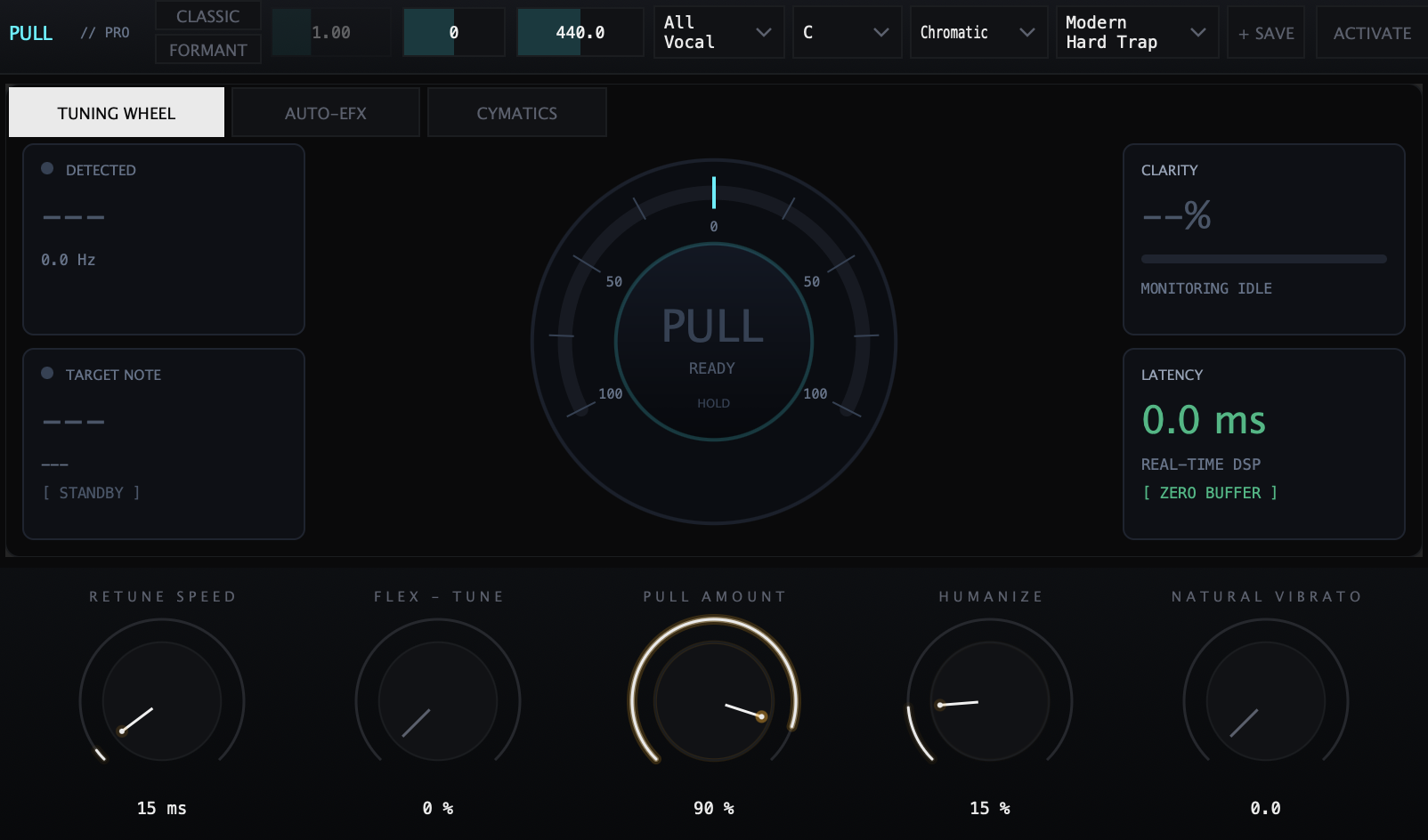
PULL: Zero-Latency AutoTune Pro
Produce in Ableton or Logic? Run zero-latency DSP in your DAW.
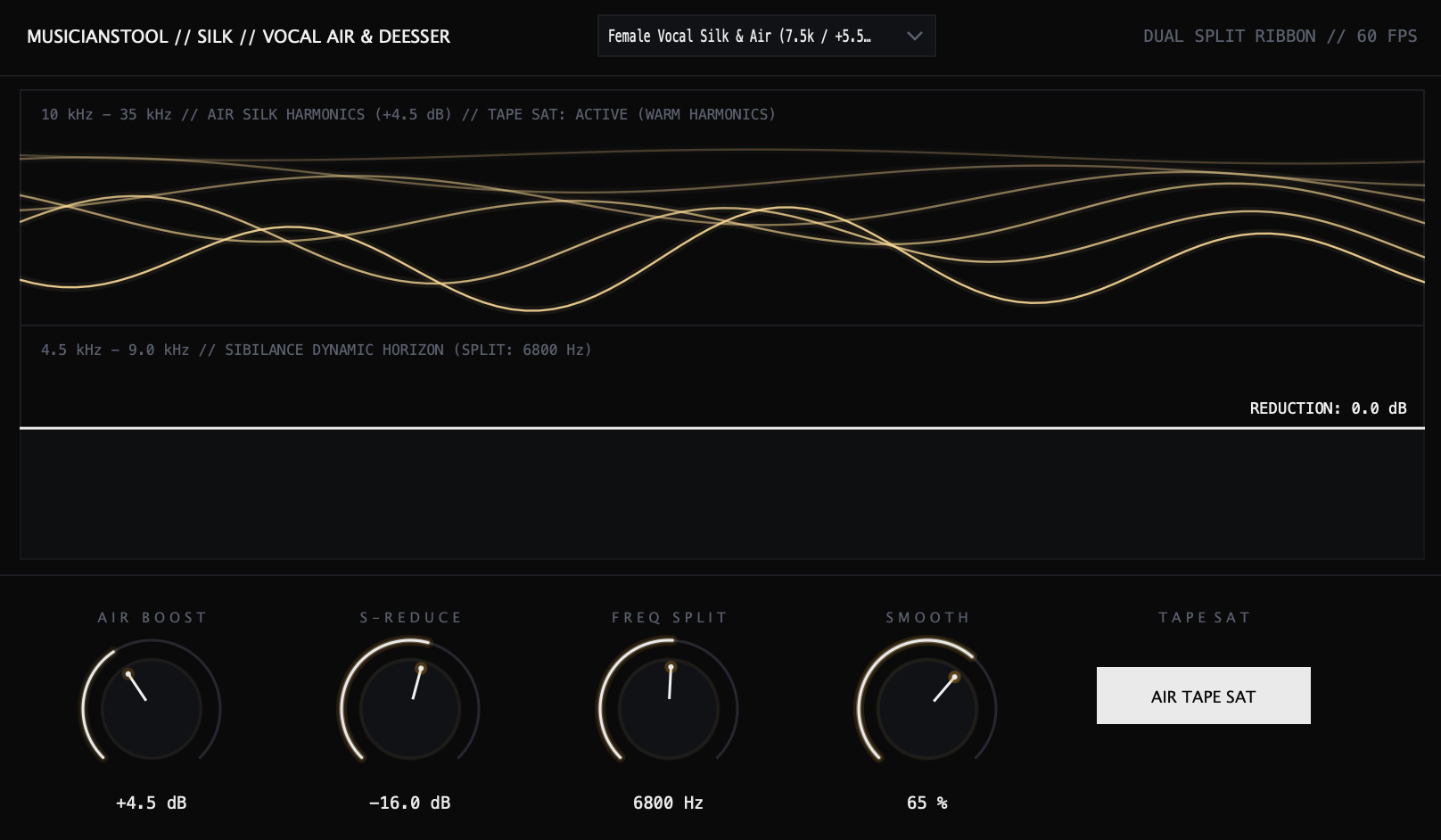
Mastering Vocal Pitch, Air & Leveling in Your DAW
Track with sub-millisecond zero-latency pitch correction (PULL), add crystalline 12kHz+ sheen without harshness (SILK), and lock dynamics with dual-fader optical leveling (AIRVOX).