🎵 Camelot Wheel
Professional harmonic mixing tool for music producers, beatmakers, and DJs. Discover key relationships and create seamless transitions or mashups.
The Camelot Wheel is a 12-hour harmonic mixing system mapping the musical Circle of Fifths into simple alphanumeric codes. Numbered 1 to 12 with 'A' for minor keys (e.g., 8A = A minor) and 'B' for major keys (8B = C major), DJs transition between adjacent numbers (±1) or relative keys (A/B) to guarantee 100% consonant, clash-free harmonic blends.
Target Compatible Keys = { Current ± 1 Hour, Same Number (A ↔ B), Semitone Boost +7 Hours }- Standard Key 8A
- A Minor (Am)
- Standard Key 8B
- C Major (C)
- Harmonic Consonance
- 100% Adjacent Blend
- Energy Boost Rule
- +1 Hour or +7 Semitone
- Relative Major/Minor
- Same Number (A ↔ B)
- Circle of Fifths Base
- 12-Tone Equal Temperament
What is a Camelot Wheel?
- Definition: The Camelot Wheel is a visual system used by music producers and DJs to blend samples, mix tracks, or write melodies harmonically without clashing notes.
- How it works: It assigns a number (1-12) and letter (A for minor, B for major) to every musical key.
- The Golden Rule: You can safely mix a track into another track that has the exact same code, a code ±1 number, or the same number but a different letter (e.g., 8A mixes perfectly with 8A, 7A, 9A, or 8B).
KEY SELECTOR
🎛️ How to Use the Camelot Wheel
Full 12-Tone Camelot Frequency & Key Transition Chart
The Camelot Wheel maps the musical Circle of Fifths into numbered segments from 1 to 12. Harmonically compatible transitions occur by moving to identical keys (8A ↔ 8A), relative keys (8A ↔ 8B), or adjacent steps (±1). Use this crawlable reference table for DJ set planning and stem harmonizing.
| Camelot Code | Musical Key | Scale Mode | Relative Key | Energy Boost (+1) | Subdominant (-1) |
|---|---|---|---|---|---|
| 12A | D♭ Minor | minor | 12B | +1A | -11A |
| 12B | E Major | major | 12A | +1B | -11B |
| 1A | A♭ Minor | minor | 1B | +2A | -12A |
| 1B | B Major | major | 1A | +2B | -12B |
| 2A | E♭ Minor | minor | 2B | +3A | -1A |
| 2B | F♯ Major | major | 2A | +3B | -1B |
| 3A | B♭ Minor | minor | 3B | +4A | -2A |
| 3B | D♭ Major | major | 3A | +4B | -2B |
| 4A | F Minor | minor | 4B | +5A | -3A |
| 4B | A♭ Major | major | 4A | +5B | -3B |
| 5A | C Minor | minor | 5B | +6A | -4A |
| 5B | E♭ Major | major | 5A | +6B | -4B |
| 6A | G Minor | minor | 6B | +7A | -5A |
| 6B | B♭ Major | major | 6A | +7B | -5B |
| 7A | D Minor | minor | 7B | +8A | -6A |
| 7B | F Major | major | 7A | +8B | -6B |
| 8A | A Minor | minor | 8B | +9A | -7A |
| 8B | C Major | major | 8A | +9B | -7B |
| 9A | E Minor | minor | 9B | +10A | -8A |
| 9B | G Major | major | 9A | +10B | -8B |
| 10A | B Minor | minor | 10B | +11A | -9A |
| 10B | D Major | major | 10A | +11B | -9B |
| 11A | F♯ Minor | minor | 11B | +12A | -10A |
| 11B | A Major | major | 11A | +12B | -10B |
12-Tone Camelot Fundamental Frequency & A4 = 440 Hz vs 432 Hz Tuning Chart
Exact scientific root frequencies (Hz) for each Camelot hour, showing standard ISO 16 concert pitch (A4=440Hz) vs Pythagorean mathematical tuning (A4=432Hz, offset: -31.77 cents).
| Camelot Pair | Tonal Root Note | Standard A4 = 440 Hz | Scientific A4 = 432 Hz | Cents Offset | Harmonic Role |
|---|---|---|---|---|---|
| 8A / 8B | A minor / C major | 440.00 Hz (A4) / 261.63 Hz (C4) | 432.00 Hz / 256.87 Hz | -31.77 cents | Concert standard fundamental & natural scale |
| 9A / 9B | E minor / G major | 329.63 Hz (E4) / 392.00 Hz (G4) | 323.63 Hz / 384.87 Hz | -31.77 cents | Perfect fifth dominant / energy lift (+1) |
| 10A / 10B | B minor / D major | 493.88 Hz (B4) / 293.66 Hz (D4) | 484.90 Hz / 288.33 Hz | -31.77 cents | Bright uplifting club anthem key |
| 11A / 11B | F# minor / A major | 369.99 Hz (F#4) / 440.00 Hz (A4) | 363.27 Hz / 432.00 Hz | -31.77 cents | Sharp emotional festival peak |
| 12A / 12B | C# minor / E major | 277.18 Hz (C#4) / 329.63 Hz (E4) | 272.14 Hz / 323.63 Hz | -31.77 cents | Deep progressive & melodic trance |
| 1A / 1B | Ab minor / B major | 415.30 Hz (Ab4) / 493.88 Hz (B4) | 407.75 Hz / 484.90 Hz | -31.77 cents | Heavy sub-bass & 808 frequency resonance |
| 2A / 2B | Eb minor / F# major | 311.13 Hz (Eb4) / 369.99 Hz (F#4) | 305.47 Hz / 363.27 Hz | -31.77 cents | Warm analog synthesizer low-end key |
| 3A / 3B | Bb minor / Db major | 466.16 Hz (Bb4) / 277.18 Hz (Db4) | 457.69 Hz / 272.14 Hz | -31.77 cents | Modern streaming trap & drill baseline key |
| 4A / 4B | F minor / Ab major | 349.23 Hz (F4) / 415.30 Hz (Ab4) | 342.88 Hz / 407.75 Hz | -31.77 cents | Peak sub-bass club acoustic response |
| 5A / 5B | C minor / Eb major | 261.63 Hz (C4) / 311.13 Hz (Eb4) | 256.87 Hz / 305.47 Hz | -31.77 cents | Classic techno & electronic anthem key |
| 6A / 6B | G minor / Bb major | 392.00 Hz (G4) / 466.16 Hz (Bb4) | 384.87 Hz / 457.69 Hz | -31.77 cents | Intense emotional dramatic progression |
| 7A / 7B | D minor / F major | 293.66 Hz (D4) / 349.23 Hz (F4) | 288.33 Hz / 342.88 Hz | -31.77 cents | Dark cinematic & moody melodic techno |
Programmatic Camelot Key Transitions & Energy Modulation Deep Dives
Surgical harmonic compatibility blueprints with acoustic frequency clash analysis, DJ EQ strategies, and tone modulation equations.
Moving from 8A to 9A represents one of the most reliable and emotionally uplifting transitions in modern DJing. Because A minor and E minor share six out of seven diatonic notes, the melodic overlap is extraordinarily stable, while the introduction of F# provides an instinctual feeling of forward momentum.
Moving counter-clockwise on the Camelot wheel from 8A to 7A releases accumulated tension. It is the premier choice when moving from a peak-hour driving anthem into a melodic, groovier breakdown or progressive house groove.
The 8A to 8B transition is the gold standard of seamless harmonic mixing. Because A natural minor and C major share every single note in their scale collections, you can execute ultra-long, 64-bar blend overlays without a single semitone clash.
When a DJ needs to break out of a steady groove and signal an explosive peak moment, jumping two numbers clockwise (+2) is the ultimate secret weapon. It produces a whole-step key change that instantly wakes up the dancefloor.
F# minor and C# minor are two of the most popular keys in contemporary electronic and progressive music. Transitioning between them creates a sophisticated, driving energy that keeps crowds captivated without jarring tonal breaks.
4A (F Minor) is famed for heavy, sub-heavy bass weight (F1 fundamental at 43.65 Hz). Shifting into 4B (Ab Major) retains all the heavy low-end tuning while lifting the harmonic top end into pure major chord resonance.
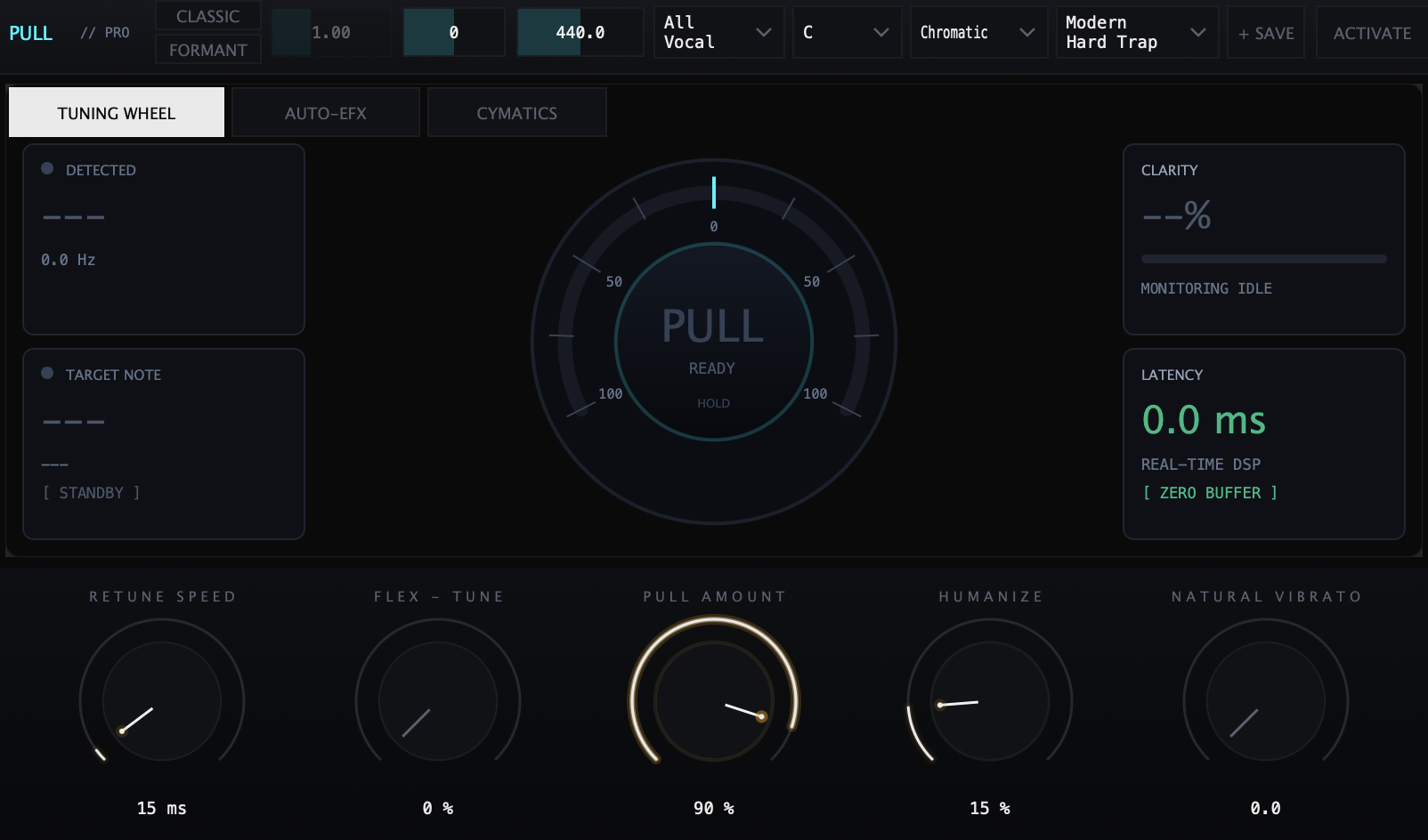
PULL: Key-Locked AutoTune
Produce in Ableton or Logic? Run zero-latency DSP in your DAW.
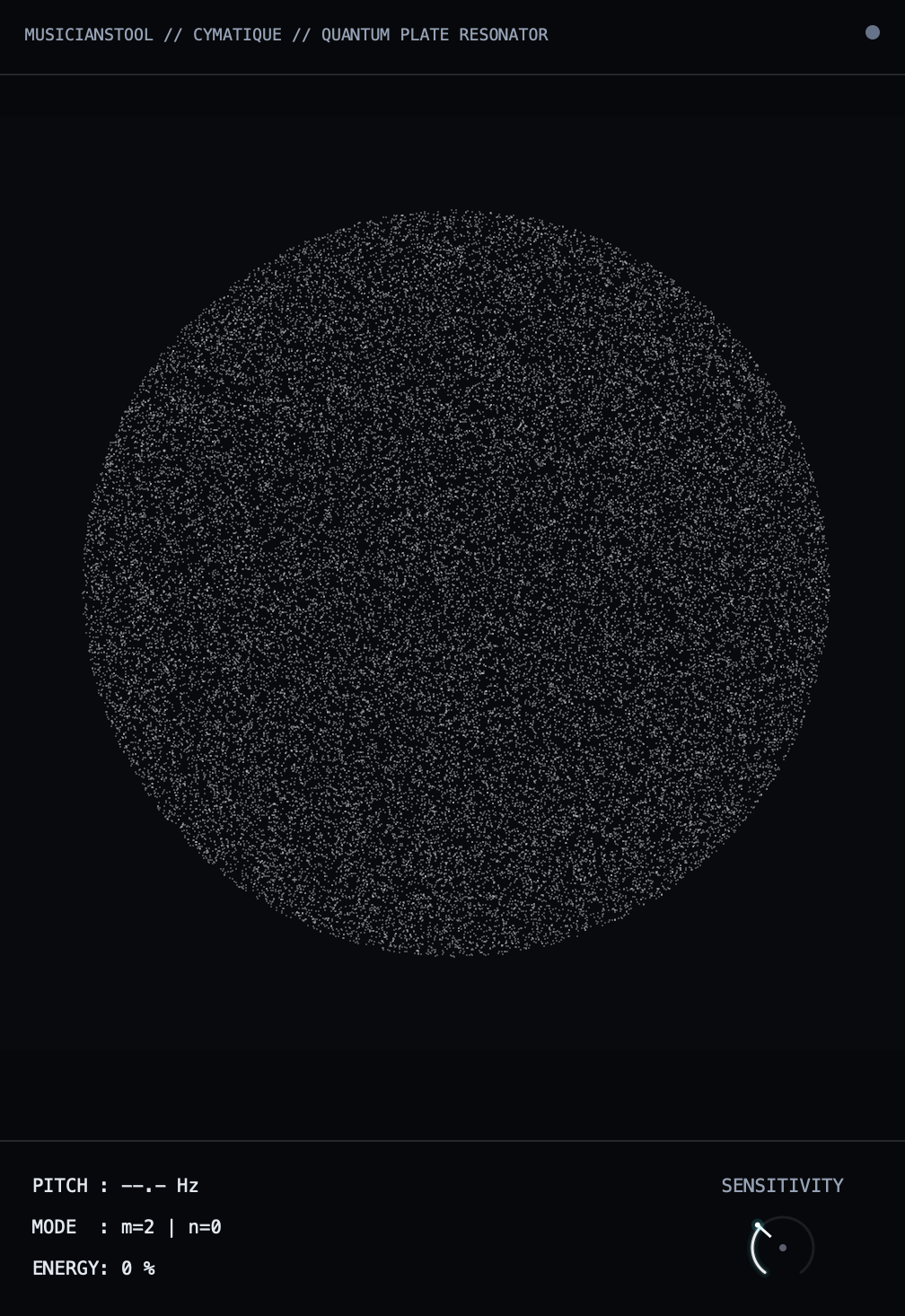
Harmonic Scale Tuning & Acoustic Mode Visualization
Lock PULL AutoTune directly to your Camelot key for flawless pitch tracking, and visualize harmonic standing waves with CYMA 70,000-particle Chladni plate physics.